- (424) 368 9398
- 24/7 Emergency Response
Serving San Pedro and neighboring areas
Water spraying from a wall, a ceiling stain spreading by the minute, or a sudden drop in water pressure? A burst pipe needs fast action. San Pedro Plumber responds 24/7 across San Pedro (90731, 90732, 90733 and 90734), stops the water, and repairs the break with a clear price before work starts.
Call Now
(424) 368-9398
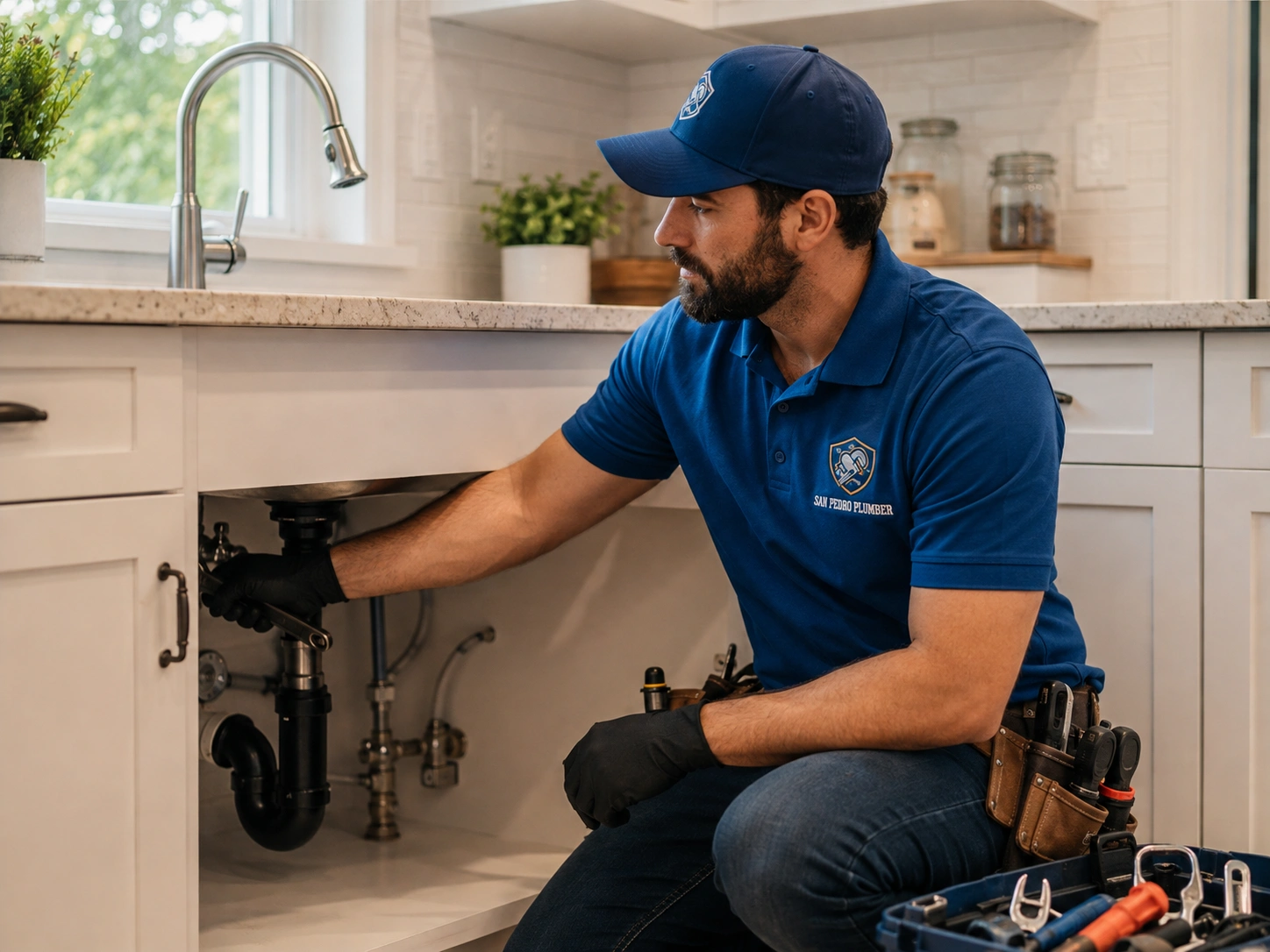
A burst pipe is a water line that splits, cracks or blows apart at a joint. It can flood a room in minutes, so the first goal is stopping the water. Then we find out why the pipe failed and fix it so the next weak spot doesn’t fail too.
In San Pedro, burst pipes are almost never caused by freezing. NOAA climate normals for the nearby LAX station show an average December low of about 49°F and zero nights below freezing in a typical year. Pipes here burst from corrosion, worn copper, high water pressure and failed supply hoses. Age is the main driver: about 42% of homes in 90731 and 90732 were built before 1960, when galvanized steel was a common water pipe. LADWP reported in 2024 that its own service lines need no galvanized replacements, so the weak points are usually the pipes inside the home.
Burst pipe repair moves in four steps, starting with the one you can take before anyone arrives.
Turn off the main shutoff valve right away. In most San Pedro homes it sits near the front of the house where the line enters, or in the garage. Switch off the water heater too if hot water is leaking. If you can’t find the valve, call our 24/7 emergency plumbing line in San Pedro and we’ll talk you through it.
We open only the wall, ceiling or cabinet section needed to reach the break. Then we look at why it failed: rust inside the pipe, a cracked fitting, a blown supply hose, or pressure above safe levels. The cause tells us whether the rest of the line is at risk.
Most bursts are fixed by cutting out the damaged section and installing new copper or PEX. When the pipe around the break is badly corroded, patching one spot only moves the problem. In that case replacing corroded galvanized lines throughout the house is the safer choice. You approve the price before work starts.
We restore the water, test the repair under pressure, and check your home’s water pressure. If it runs high, a pressure-reducing valve protects every pipe in the house. We also point out wet areas that need drying to prevent mold.
Calls are answered 24 hours a day, every day, by a local team that knows San Pedro’s housing. One in four homes in 90731 was built in 1939 or earlier, and older neighborhoods such as Averill Park and Barton Hill have many of them. We know where those older runs tend to fail.
Speed matters, but so does a repair that lasts. We fix the break, check the pipe on both sides of it, and tell you plainly if more of the line is close to failing. The price is set before work begins, and the area is cleaned up before we leave. Burst pipe repair is one part of what we do, and your San Pedro-based plumbing crew also handles leaks, drains, and water heaters.
A burst pipe releases water at full household pressure. The longer it runs, the more of your home it reaches.
An open water line can release several gallons a minute. That is enough to soak a room’s flooring and the ceiling below it in under an hour. Shutting off the main valve is the fastest way to stop the damage from growing.
Water from a burst pipe runs along framing, under flooring and into the ceiling below. In two-story homes and apartment buildings it can reach a neighbor’s unit. Fast repair and drying limit how far it spreads.
California’s plumbing code calls for a pressure regulator when water pressure is above 80 psi. If a home has no working regulator, the same high pressure can burst the next weak spot. A quick gauge test after the repair answers that question.
Shut off the main water valve, then turn off the water heater if hot water is leaking. Move valuables away from the water and turn off power to any area where water reaches outlets. Then call (424) 368-9398.
Freezing is rare here. NOAA normals show zero nights below freezing in a typical year near the coast. Most bursts come from corrosion in old galvanized or copper pipe, high water pressure, and worn supply hoses on toilets, sinks and washing machines.
In most cases, yes. Calls are answered 24/7, and most breaks are repaired on the first visit with new copper or PEX. Larger repipe jobs are scheduled after the water is stopped and the home is safe.
One burst on an otherwise sound line usually needs only a section repair. If the pipe is galvanized and has leaked or burst more than once, repiping is often the better long-term choice. You see the condition of the pipe before you decide.
Many homeowners policies cover sudden water damage from a burst pipe, but not damage from slow, ongoing leaks. Take photos, keep receipts, and call your insurer early.
Check your water pressure, replace rubber supply hoses with braided steel ones, and fix small leaks before they grow. In homes built before 1960, ask about the condition of the galvanized lines. Rust-colored water is an early warning sign.
Local data sources: U.S. Census Bureau, American Community Survey 2020-2024 5-year estimates (tables B25034, B25035, B25003 and B25024) for ZIP codes 90731 and 90732; NOAA 1991-2020 U.S. Climate Normals (Los Angeles International Airport station); U.S. EPA WaterSense “Fix a Leak Week” data.